Analysis of interchangeability between 1:1 replace side mirror parts and OEM parts: A guide for auto repair shops
Introduction
Side mirrors are among the most frequently replaced exterior components on vehicles. Whether due to collision damage, parking lot incidents, or general wear and tear, auto repair shops face a constant demand for side mirror replacements. A critical question arises: can 1:1 replacement aftermarket side mirror parts truly interchange with OEM (Original Equipment Manufacturer) parts? This comprehensive guide examines the key factors that determine interchangeability and provides actionable insights for auto repair professionals.
1. Installation Accuracy and Mounting Point Alignment
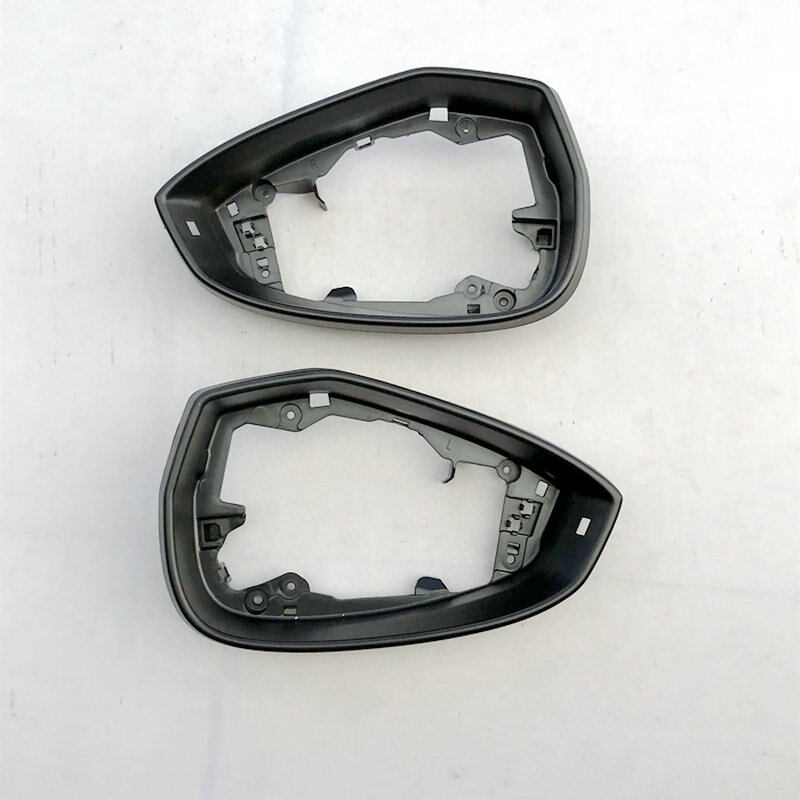
The foundation of interchangeability lies in the physical mounting interface. OEM side mirrors are engineered with precise mounting bolt patterns, bracket geometries, and door panel cutout dimensions specific to each vehicle make, model, and year. A genuine 1:1 replacement part must replicate these dimensions within tight tolerances—typically ±0.5mm for bolt hole positions and ±1.0mm for overall housing contour.
Key Measurement Points
- Bolt pattern spacing: The distance between mounting bolts must match OEM specifications exactly. Even a 1-2mm deviation can cause misalignment, leading to wind noise and vibration at highway speeds.
- Base plate contour: The mirror base must conform to the door skin curvature. Poor contour matching creates gaps that allow water ingress and increase wind drag.
- Cable routing channel: The path through which the wiring harness passes from the door interior to the mirror assembly must align precisely to prevent pinching or stretching of wires.
High-quality 1:1 replacement parts from reputable manufacturers typically achieve mounting accuracy within OEM tolerances. However, repair shops should always verify fitment by performing a dry-fit installation before final assembly.

2. Wiring Harness Matching and Electrical Compatibility
Modern side mirrors integrate numerous electronic features that significantly complicate interchangeability:
Common Electrical Features
- Power adjustment motors: Typically 2-3 DC motors for horizontal, vertical, and sometimes tilt adjustment. Connector pin count and pinout must match the vehicle's door control module.
- Heated mirror elements: Resistive heating grids embedded in or bonded to the mirror glass. Voltage requirements (usually 12V) and current draw must be compatible with the vehicle's heating circuit.
- Turn signal repeaters: LED or incandescent indicators integrated into the mirror housing. Polarity sensitivity and CAN bus compatibility are critical considerations.
- Blind spot monitoring (BSM) indicators: LED warning lights that interface with the vehicle's ADAS (Advanced Driver Assistance Systems). Incorrect wiring can trigger fault codes or disable the BSM system entirely.
- Auto-dimming (electrochromic) glass: Requires specific voltage signals from ambient light sensors. Mismatched connectors or incorrect resistance values can render the dimming function inoperative.
- Power folding motors: Electric motors that fold the mirror assembly against the vehicle body. These require correct gear ratio matching and limit switch calibration.
- Puddle lamps and welcome lights: Ground-illuminating LEDs that activate when doors are unlocked. Wiring must match the body control module output.
Connector Compatibility
The most common point of failure in aftermarket mirror installations is connector mismatching. OEM connectors are often proprietary designs specific to the vehicle manufacturer. Quality 1:1 replacement parts should include the exact connector type and pinout. Some aftermarket suppliers provide adapter harnesses, but these introduce additional failure points and should be avoided when possible.
Best practice: Before ordering replacement mirrors, verify the complete option code list for the specific vehicle. Many manufacturers use different wiring configurations for the same model year depending on trim level and optional equipment packages.
3. Lens and Glass Specifications
The mirror glass element is subject to regulatory requirements that vary by market and must be carefully matched for proper interchangeability.
Regulatory Standards
- North America (FMVSS 111 / CMVSS 111): Driver-side mirrors must provide unit magnification (1:1 flat reflection). Passenger-side mirrors must be convex with a curvature radius between 889mm and 1651mm (US) or 890mm and 1800mm (Canada).
- Europe (ECE Regulation 46): Permits planar, convex, or aspheric mirror surfaces on either side. Aspheric mirrors with a visible dividing line between flat and convex sections are common.
- Japan and other markets: Generally follow ECE standards, though some regional variations exist.
Glass Quality Factors
- Optical clarity: OEM glass typically achieves less than 1% optical distortion. Aftermarket glass should meet the same standard to prevent driver fatigue and misjudgment of distances.
- Reflective coating durability: OEM mirrors use multi-layer coatings rated for 5,000+ hours of UV exposure. Inferior coatings may degrade within 1-2 years, showing oxidation spots and reduced reflectivity.
- Heating element integration: For heated mirrors, the resistive trace pattern and wattage must match OEM specifications to ensure even defrosting without hot spots that could crack the glass.
- Auto-dimming compatibility: Electrochromic glass requires precise matching of the sensor interface circuit. Incorrect glass may not dim properly or may remain permanently dark.
4. Folding Mechanism Performance
Power-folding and manual-folding mechanisms represent one of the most mechanically complex aspects of side mirror interchangeability.
Power Folding Systems
Electric folding mechanisms consist of a motor, gear train, and limit switches housed within the mirror base. Key interchangeability factors include:
- Motor specifications: Voltage, current draw, and rotational speed must match the vehicle's control module expectations. Mismatched motors may fold too slowly, too quickly, or fail to reach the correct end positions.
- Gear ratio: Determines the folding speed and torque. Incorrect ratios can cause the mirror to stall mid-fold or overshoot its parked position.
- Limit switch calibration: Tells the control module when the mirror has reached its fully extended or fully folded position. Misaligned limit switches can cause the motor to run continuously, potentially burning out the motor or blowing a fuse.
- Memory position integration: On vehicles with memory seat/mirror settings, the folding mechanism must communicate correctly with the memory module to restore the correct driving position after unfolding.
Manual Folding Systems
Even manual folding mechanisms require precision engineering. The detent mechanism that holds the mirror in its extended and folded positions must provide the correct holding torque—firm enough to resist wind forces at highway speeds, yet smooth enough for comfortable manual operation. Aftermarket parts with poorly calibrated detents may feel loose during driving or require excessive force to fold.
5. Cost-Benefit Analysis for Repair Shops
Understanding the economic implications of choosing between OEM and 1:1 replacement parts is essential for repair shop profitability and customer satisfaction.
Price Comparison
| Component | OEM Price Range (USD) | 1:1 Replacement Price Range (USD) | Typical Savings |
|---|---|---|---|
| Complete mirror assembly (basic) | $200 - $400 | $80 - $180 | 50-60% |
| Complete mirror assembly (heated + power fold) | $400 - $800 | $150 - $350 | 50-60% |
| Complete mirror assembly (full option: BSM, auto-dim, puddle lamp) | $600 - $1,200 | $250 - $500 | 50-60% |
| Mirror glass only | $50 - $150 | $15 - $50 | 60-70% |
| Mirror cover/cap | $30 - $80 | $10 - $30 | 60-65% |
Warranty and Liability Considerations
When selecting replacement parts, repair shops must consider warranty implications. OEM parts typically carry a 12-month/12,000-mile warranty backed by the vehicle manufacturer. Quality aftermarket 1:1 replacements from established suppliers often provide comparable warranties. However, shops should document the parts source and maintain records for potential warranty claims.
6. Verification Checklist for Interchangeability
Before installing any 1:1 replacement side mirror, auto repair shops should follow this verification protocol:
- Confirm vehicle identification: Verify exact year, make, model, trim level, and option codes. Cross-reference the OEM part number with the replacement part number.
- Visual comparison: Compare the replacement part side-by-side with the OEM part. Check housing shape, mounting bracket geometry, and connector type.
- Dimensional verification: Measure critical mounting dimensions with calipers. Bolt hole spacing should be within ±0.5mm of OEM.
- Electrical testing: Before installation, bench-test all electrical functions using a 12V power supply. Verify motor operation, heating element continuity, LED function, and sensor response.
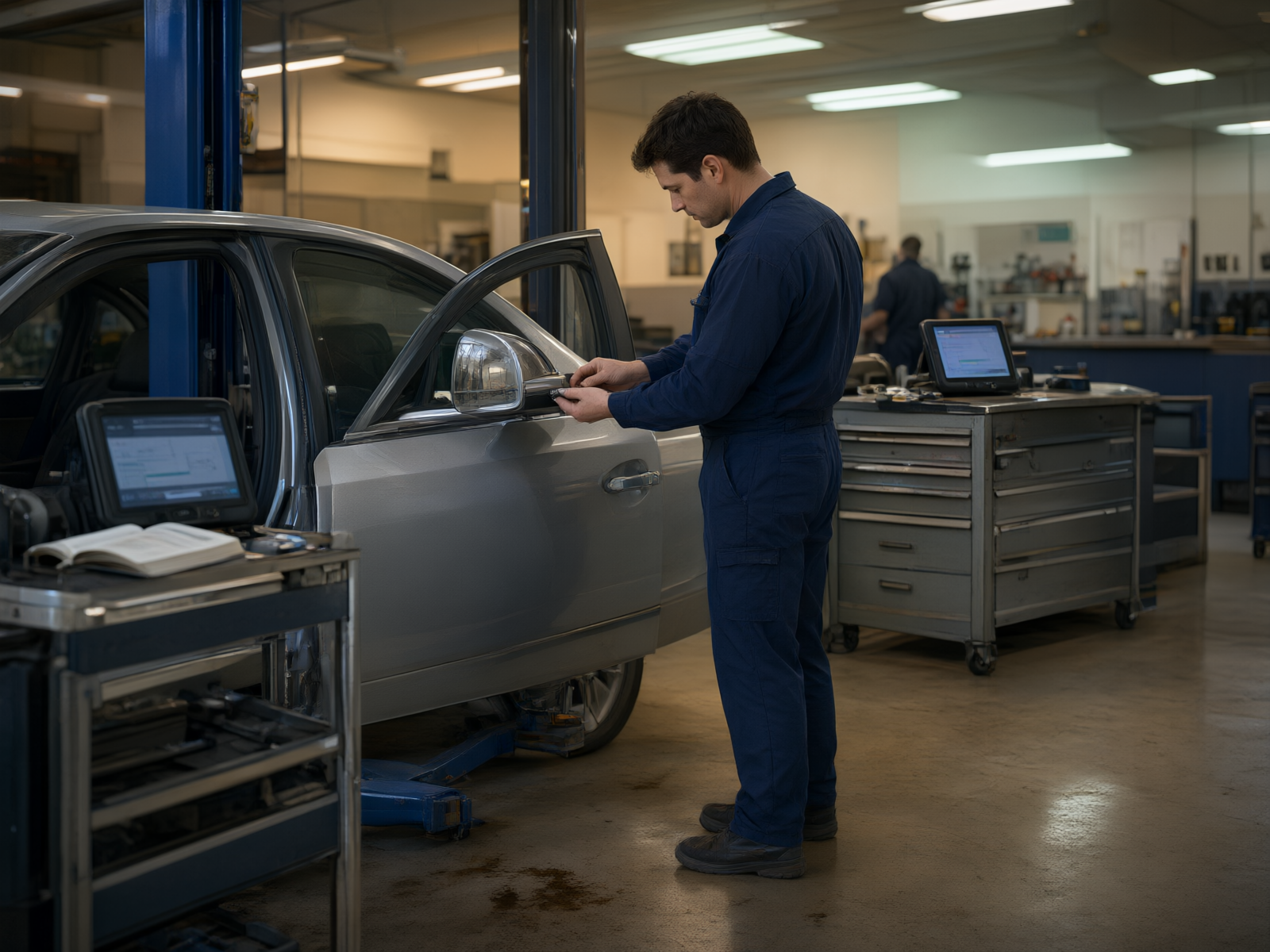
- Dry-fit installation: Mount the mirror without fully tightening fasteners. Check for gaps between the base and door skin, verify cable routing, and ensure the mirror sits at the correct angle.
- Functional verification: After installation, test all electronic functions through the vehicle's control interface. Check for diagnostic trouble codes (DTCs) using an OBD-II scanner.
- Road test: Drive the vehicle at highway speeds to check for wind noise, vibration, and proper visibility. Verify that power-folding mirrors deploy and retract correctly.
Conclusion
The interchangeability between 1:1 replacement side mirror parts and OEM components depends on multiple factors spanning mechanical fitment, electrical compatibility, optical quality, and regulatory compliance. High-quality aftermarket parts from reputable manufacturers can achieve near-OEM levels of interchangeability when proper verification procedures are followed. Auto repair shops that implement systematic verification checklists and maintain strong supplier relationships can confidently offer customers cost-effective alternatives to OEM parts without sacrificing quality or safety.
The key takeaway for repair professionals: never assume interchangeability based on appearance alone. Always verify mounting dimensions, electrical connectors, glass specifications, and functional performance before completing any side mirror replacement. This disciplined approach protects both the shop's reputation and the customer's safety on the road.